When is X-ray imaging indicated?
X-ray is the method of choice in many clinical situations, including:
- Suspected fractures or joint injuries
- Evaluation of degenerative conditions (e.g., osteoarthritis)
- Diagnosis of lung diseases (e.g., pneumonia)
- Assessment of spinal conditions
- Follow-up after injury or surgery
Due to its speed and availability, X-ray is particularly valuable in initial diagnostics and emergency care.
Modern Digital X-ray Technology
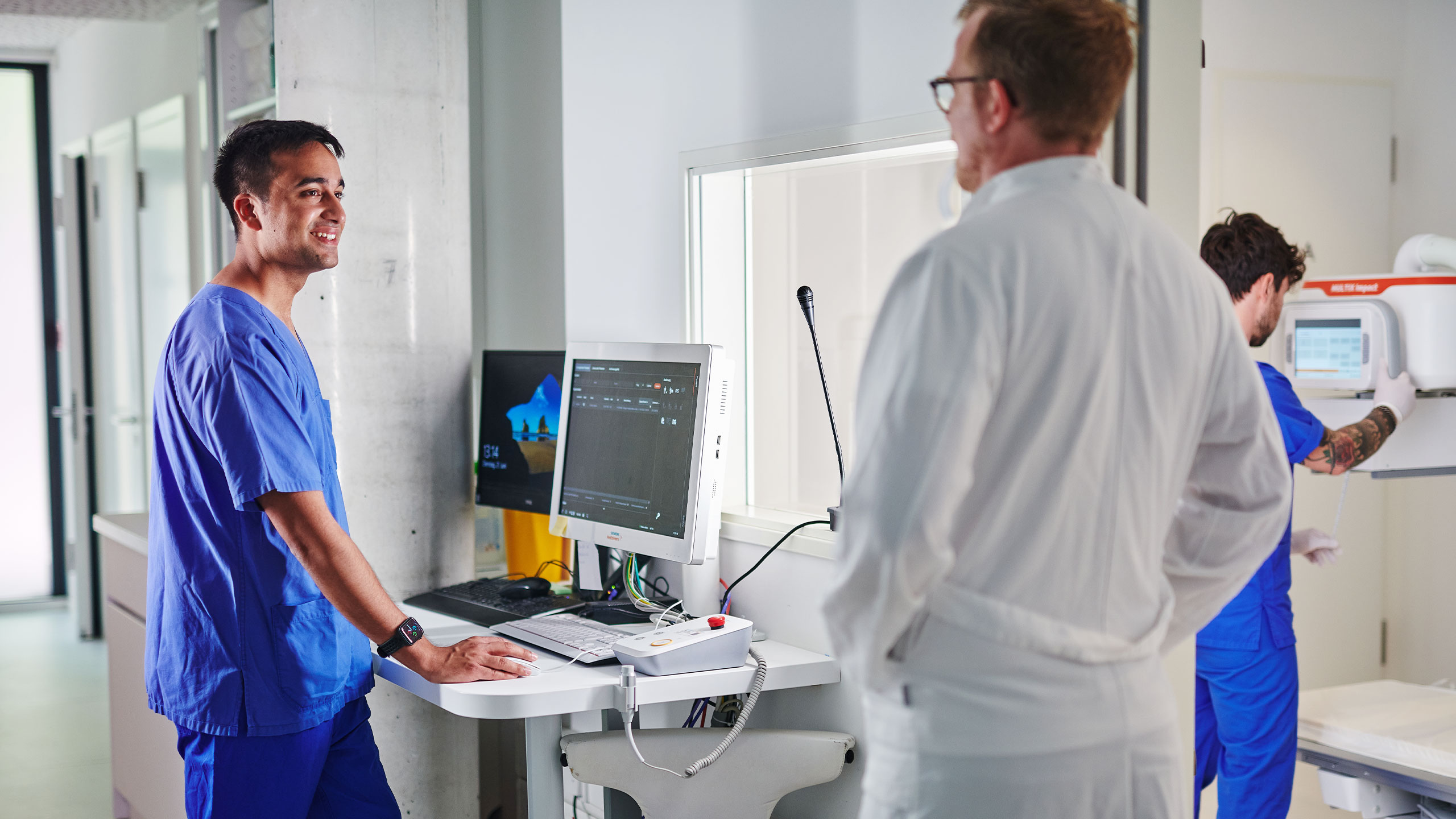
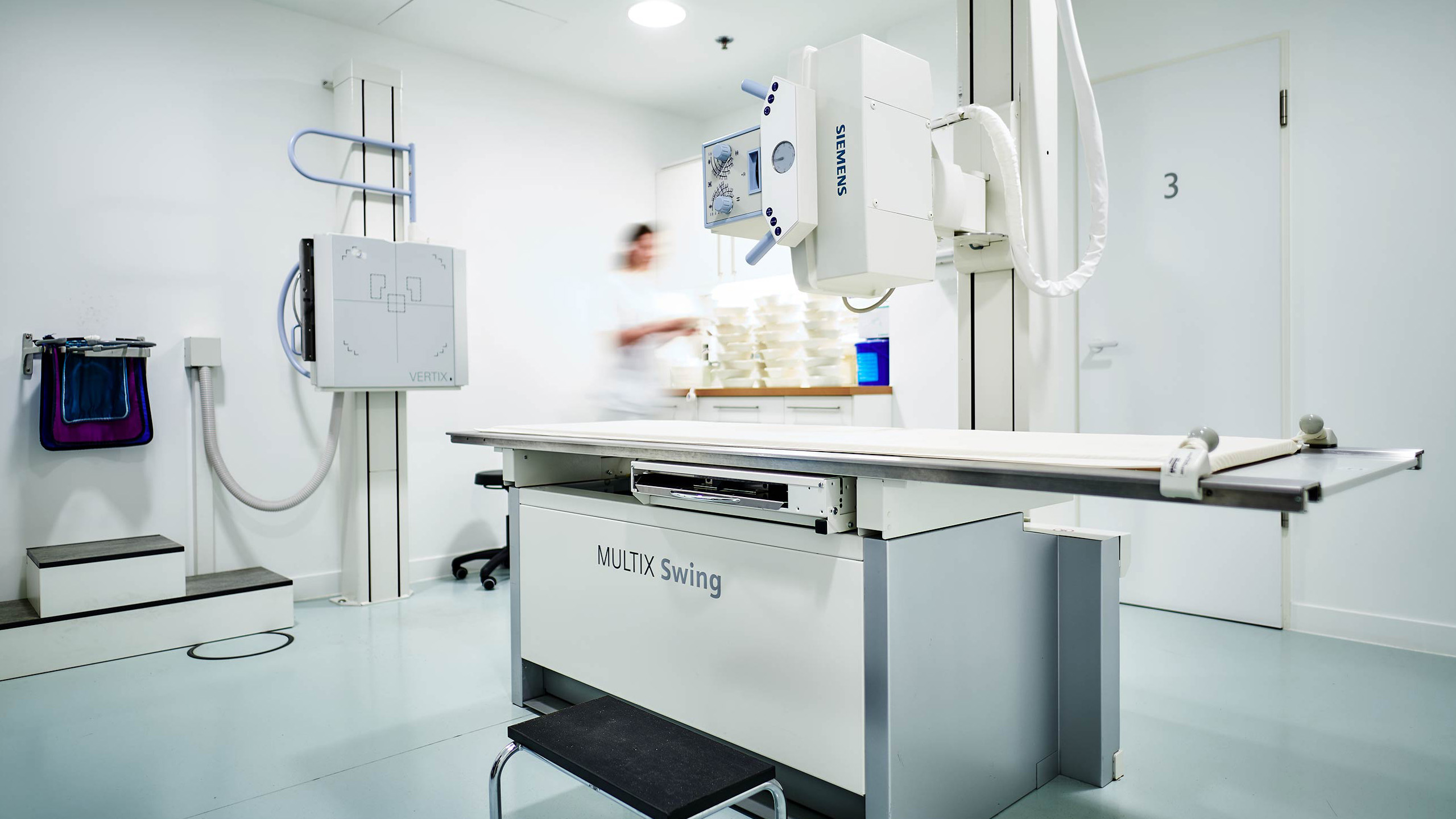
We consistently use state-of-the-art digital X-ray systems.
These offer:
- Immediate image availability without processing delays
- High image quality with excellent spatial resolution
- Optimized radiation dose through advanced detector technology
- Fast and efficient examination workflows
Digital imaging significantly improves both patient experience and clinical efficiency.
Focus on Low Radiation Exposure
Radiation protection is a key priority in all X-ray examinations.
- All studies are performed according to the ALARA principle (“as low as reasonably achievable”)
- Use of modern equipment to minimize radiation dose
- Individual adaptation of each examination to the clinical indication and patient
Overall, X-ray imaging is considered a low-dose diagnostic modality, making it well suited for many routine clinical questions.
Advantages of X-ray Imaging
X-ray offers several key advantages in everyday clinical practice:
- Very fast examination – typically completed within minutes
- Wide availability and ease of use
- Excellent visualization of bone structures
- Efficient first-line diagnostic tool
- Low radiation exposure compared to more complex imaging modalities
For many conditions, X-ray serves as the initial diagnostic step, with CT or MRI used when further detail is required.
Our Commitment
We combine advanced digital X-ray technology with experienced radiological expertise—delivering fast, safe, and precise diagnostics at the highest level.
Our reports provide clear and clinically relevant information to support optimal patient care.